
Artikel: Nickel Boys – RaMell Ross
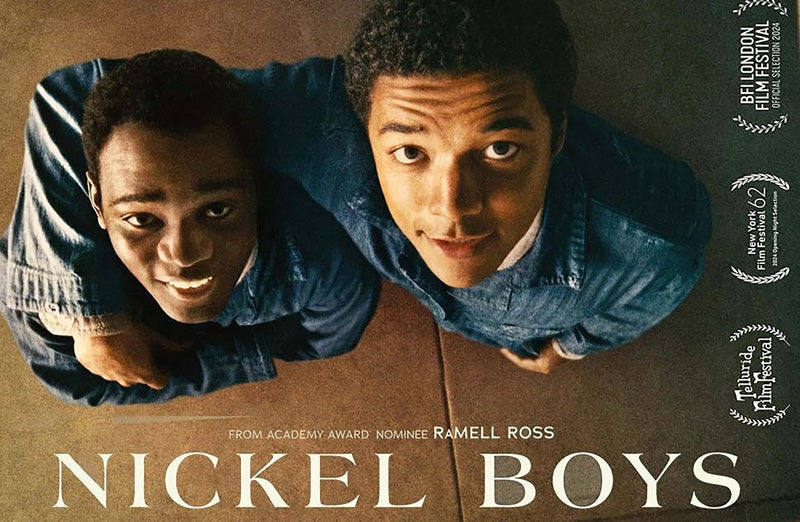
Nickel Boys – RaMell Ross
Nickel Boys (2024) basiert auf dem Roman „The Nickel Boys“ von Colson Whitehead und erzählt eine erschütternde Geschichte über institutionellen Rassismus in den Vereinigten Staaten. Die Verfilmung greift die historischen Ereignisse rund um die berüchtigte Dozier School for Boys in Florida auf und verdichtet sie zu einem eindringlichen Drama über Gewalt, Machtmissbrauch und strukturelle Ungerechtigkeit. Im Mittelpunkt stehen zwei afroamerikanische Jungen, deren Wege sich in einer Besserungsanstalt kreuzen, die nach außen hin Disziplin und Moral propagiert, intern jedoch von Brutalität und rassistischer Willkür geprägt ist.
Der Film zeigt anschaulich, wie tief Rassismus im Justiz- und Bildungssystem verwurzelt war, insbesondere in den 1960er Jahren auf dem Höhepunkt der Bürgerrechtsbewegung. Inspiriert von den Idealen von Martin Luther King Jr. glaubt der Protagonist zunächst an Gerechtigkeit und moralischen Fortschritt. In der sogenannten Nickel Academy wird er jedoch mit einer Realität konfrontiert, in der schwarze Jugendliche systematisch härter bestraft, schlechter behandelt und ihrer Würde beraubt werden. Der Film macht deutlich, dass Diskriminierung nicht nur das Ergebnis individueller Vorurteile ist, sondern auch in Institutionen verankert sein kann. Unterstützt durch Gesetze, soziale Normen und mangelnde Rechenschaftspflicht.
Darüber hinaus thematisiert Nickel Boys die psychologischen Folgen rassistischer Gewalt. Die Erfahrungen der Jungen stehen stellvertretend für Generationen afroamerikanischer Kinder, denen Bildung, Sicherheit und Chancengleichheit verwehrt blieben. Der Film verknüpft persönliche Schicksale mit einer umfassenderen gesellschaftlichen Anklage und zeigt, wie Traumata über Jahre hinweg nachwirken können. Indem er historische Realität mit emotionaler Unmittelbarkeit verbindet, regt er das Publikum dazu an, sich mit der Vergangenheit auseinanderzusetzen und zu hinterfragen, wie weit die Schatten struktureller Diskriminierung noch in die Gegenwart reichen.
%20basiert%20auf%20dem%20Roman%20%E2%80%9EThe%20Nickel%20Boys%E2%80%9C%20von%20Colson%20Whitehead%20und%20erz%C3%A4hlt%20eine%20ersch%C3%BCtternde%20Geschichte%20%C3%BCber%20institutionellen%20Rassismus%20in%20den%20Vereinigten%20Staaten.%20Die%20Verfilmung%20...)