
Article: Nickel Boys – RaMell Ross
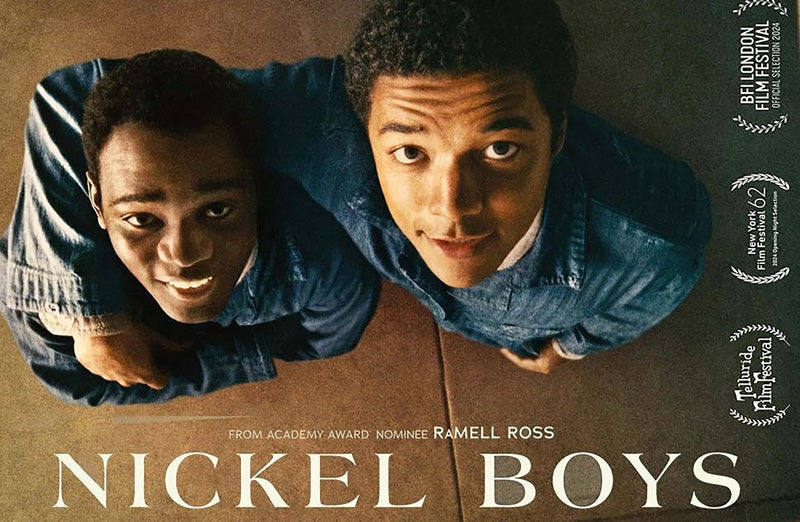
Nickel Boys – RaMell Ross
Nickel Boys (2024), based on Colson Whitehead's novel "The Nickel Boys," tells a harrowing story of institutional racism in the United States. The film adaptation takes the historical events surrounding Florida's notorious Dozier School for Boys and condenses them into a poignant drama about violence, abuse of power, and structural injustice. It centers on two African American boys whose paths cross in a reform school that outwardly preaches discipline and morality, but internally is characterized by brutality and racist arbitrary rule.
The film vividly illustrates how deeply racism was rooted in the justice and education systems, especially in the 1960s at the height of the Civil Rights Movement. Inspired by the ideals of Martin Luther King Jr., the protagonist initially believes in justice and moral progress. However, at the so-called Nickel Academy, he is confronted with a reality in which Black youth are systematically punished more severely, treated worse, and stripped of their dignity. The film makes it clear that discrimination is not only the result of individual prejudice, but can also be embedded in institutions, supported by laws, social norms, and a lack of accountability.
Furthermore, Nickel Boys addresses the psychological consequences of racial violence. The boys' experiences are representative of generations of African American children who were denied education, safety, and equal opportunities. The film links personal fates with a broader societal indictment, showing how trauma can linger for years. By combining historical reality with emotional immediacy, it encourages the audience to confront the past and question how far the shadows of structural discrimination still reach into the present.
,%20based%20on%20Colson%20Whitehead's%20novel%20%22The%20Nickel%20Boys,%22%20tells%20a%20harrowing%20story%20of%20institutional%20racism%20in%20the%20United%20States.%20The%20film%20adaptation%20takes%20the%20historical%20events%20surrou...)